Buyers negotiate hard on unit price and then let the supplier pick the cheapest carton. It is backwards. The few cents saved on thinner board come straight back as scuffed armrests, cracked bases and a reseller emailing photos of dented boxes. On a high-volume programme the damage rate is a bigger number than most price concessions, and it is the one number you genuinely control through packing.
What we pack against
The reference serious buyers ask for is ISTA — the International Safe Transit Association protocols that simulate what actually happens to a box in transit, rather than guessing. ISTA 1A is a basic drop test for a corrugated carton; the ISTA 3-Series are general-simulation tests that reproduce the vibration, the drops and the stacking pressure of the real distribution environment, and ISTA 3A is the one e-commerce buyers cite most because it mimics a parcel's rough solo journey through a courier network. We do not slap "passes ISTA" on a quote as a slogan — we pack to those methods, and transit testing can be arranged per order if your channel requires a documented report.
Where chairs actually break
It is rarely the seat. It is the corners of the carton, the exposed armrest tips, the gas-lift cylinder taking a side impact, and the base legs poking through thin board when the box is dropped on an edge. So that is where the packing goes: moulded foam or pulp corner blocks to take the drop energy, a separate sleeve over the armrests because they scuff first, the cylinder boxed or wrapped so a drop on its end does not bend the shaft, and a carton with enough edge-crush strength to carry the weight of the chairs stacked on top of it for 30 to 45 days at sea. For a gaming chair with deep bolsters, we add foam over the wings, because the wings are the first thing a careless handler crushes.
Stacking is the silent killer. A carton that survives a single drop test can still fail when it sits at the bottom of a column for six weeks with a full container's weight pressing down through it, especially if the box absorbs humidity at sea and the board softens. That is why edge-crush strength and moisture resistance matter as much as the drop rating — and why we spec board for the journey, not just for the warehouse.
The trade-off: cube and cost vs returns
Heavier packing protects better but eats two things — carton cube and money. A box that is 10 mm oversized on every side to fit more foam costs you container cube across a thousand units, which can quietly wipe out the protection saving. So we tune it: enough protection to survive the lane your chairs actually travel, not gold-plated packing for a journey to the next town. A flat-packed mesh task chair needs less than a fully assembled executive chair, and we pack them differently rather than over-packing everything to one worst-case standard. The goal is the lowest total of packing cost plus damage cost, not the lowest packing cost alone.
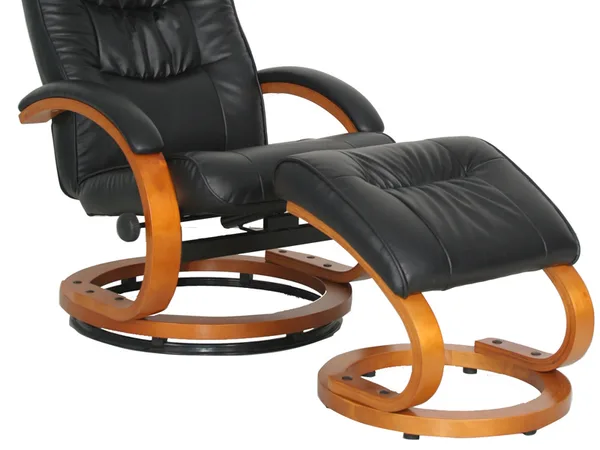
The honest version: knocked-down packing — shipping the chair in parts for the customer to assemble — almost always lowers both the damage rate and the cube at once, because the fragile assembled geometry never exists in the box. The cost is your end customer doing five minutes of assembly with a clear instruction sheet. For most office and gaming chairs that is the right call. For a leisure recliner that buyers expect to arrive ready to sit in, it is not, and we would not push it on you. We will tell you which way a given model should go based on how it ships and who unboxes it.
Make damage measurable
You cannot improve a number you do not track. Ask your resellers to log damage by type — scuffed arm, cracked base, bent cylinder, crushed corner — and send it back to us. That feedback is gold, because it tells us exactly which protection to add and which to trim. A buyer who reports "all the damage is on the base legs" gets a base-leg fix in the next run; a buyer who just says "too many returns" gets a guess. We would rather work from your data than from our assumptions. Over a few orders that loop — pack, ship, log the damage, adjust the pack — drives the damage rate down to where it stops eating your margin, and that is a number you keep for the life of the model.
Send us your destination lane and channel — retail, e-commerce or contract — and we will spec packing to match the real journey rather than a worst-case guess, and lock it into your approval sample so it is fixed for the run. Start through our contact page, see the OEM/ODM workflow, or email [email protected].